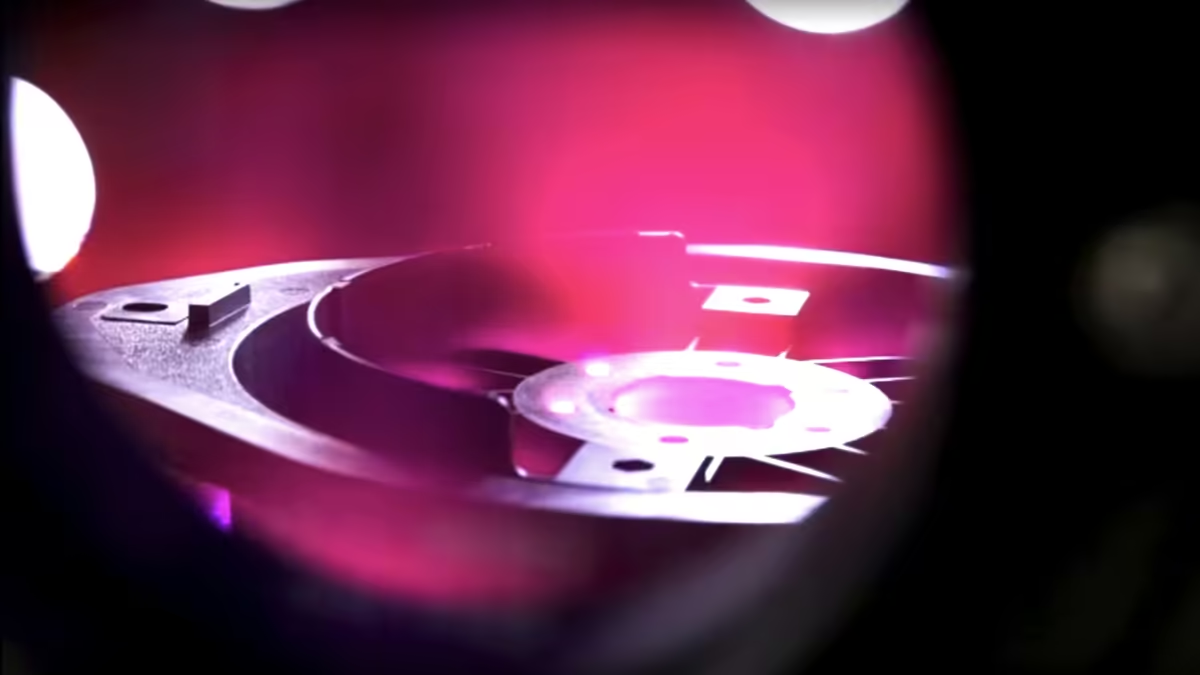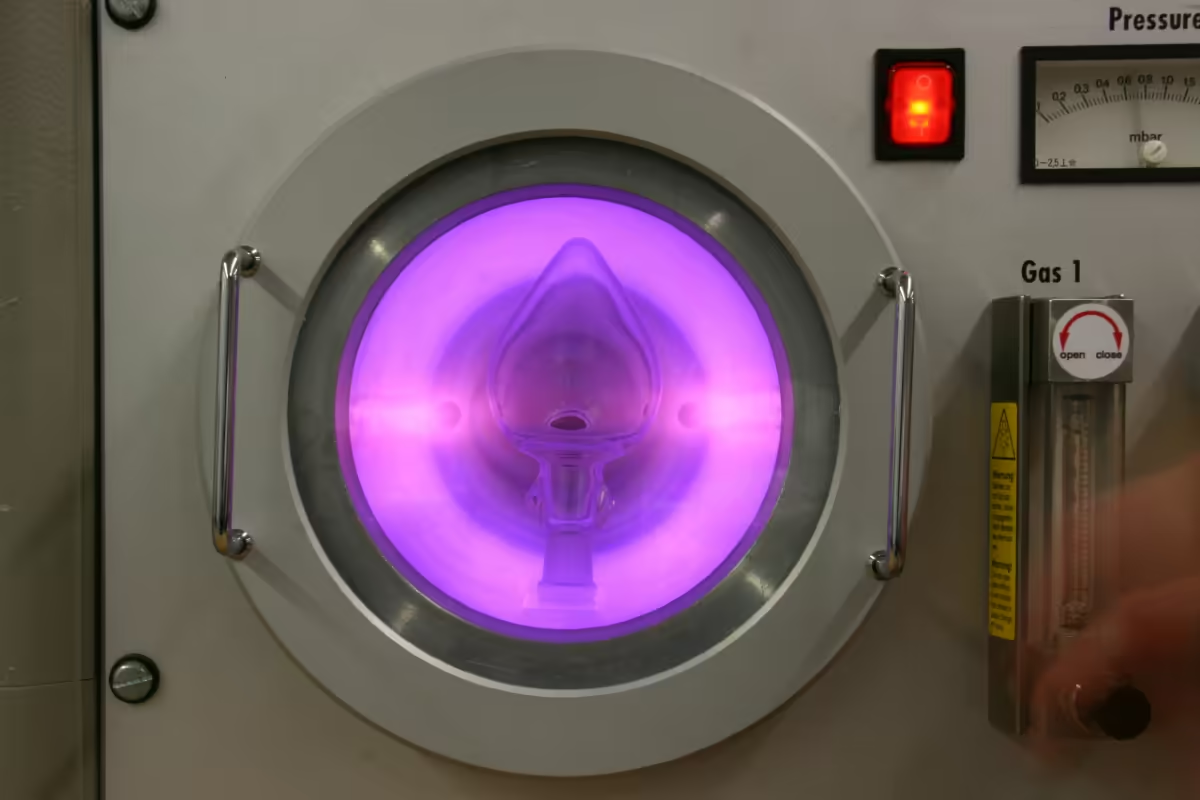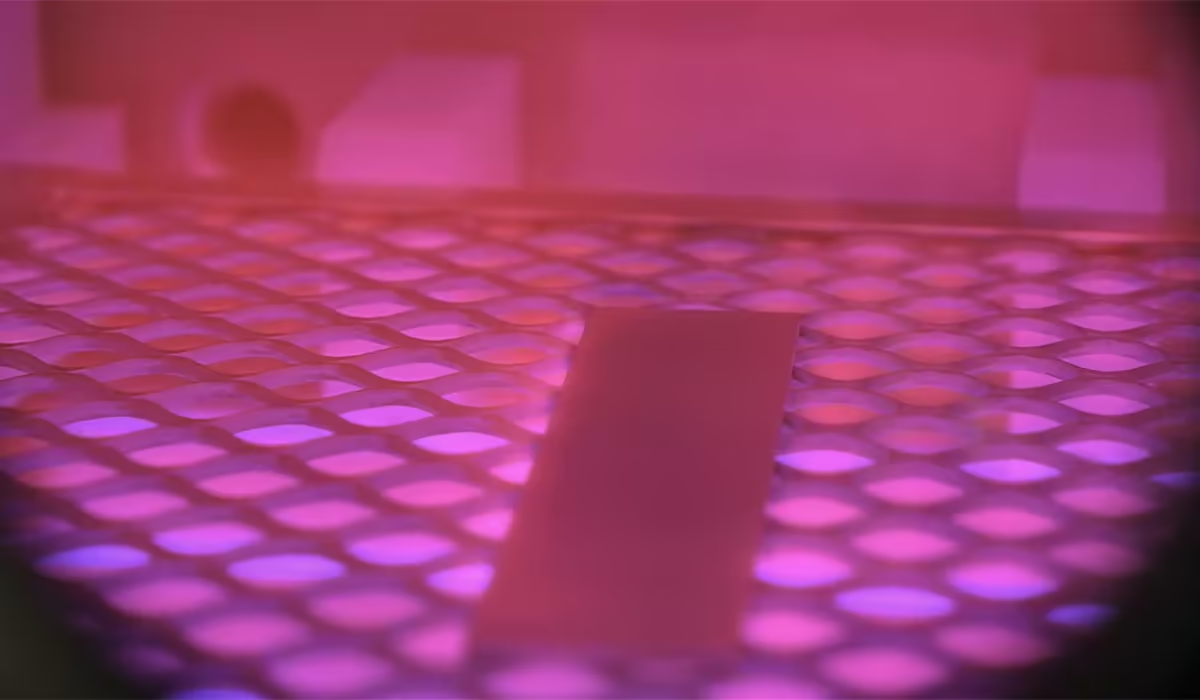



In this video, I share key differences between batch and in-line plasma cleaners, helping manufacturers understand which solution will provide the best outcomes within their production lines. We further discuss these differences in the article below.
Choosing the right plasma cleaning system can have a significant impact on production efficiency, product quality, and long-term operational performance. While both batch plasma treatment equipment and inline plasma cleaners are designed to prepare surfaces for critical manufacturing processes, they serve very different production needs.
Understanding the key differences between these systems is essential for selecting a solution that supports your throughput requirements, operational goals, and future growth plans.
Why Choosing the Right Plasma System Matters
Plasma cleaning does far more than prepare a surface for bonding, coating, or assembly. The right plasma system can have a direct impact on production efficiency, product quality, and overall manufacturing performance.
When plasma treatment is aligned with your operational requirements, it helps maintain consistent results, improve throughput, and reduce costly production interruptions. It can also support better cost control by minimizing waste, rework, and inefficiencies throughout the manufacturing process.
As production demands evolve, the right solution provides the scalability needed to support future growth while maintaining the process consistency and quality standards your customers expect.
What Is Batch Plasma Treatment Equipment?
Batch plasma treatment equipment is a chamber-based plasma cleaning solution that processes components in groups, or batches, rather than as part of a continuous production line.
Components are manually or semi-automatically loaded into a vacuum chamber, where plasma treatment is applied to all parts within the chamber during a controlled cycle.
This approach provides manufacturers with greater flexibility when working with different product types, sizes, and geometries. Because parts are processed within an enclosed chamber, batch systems can easily accommodate changing production requirements without significant modifications to the equipment or workflow.
Advantages of Batch Plasma Systems
- Flexible scheduling: Production can be planned around changing demand, making it easier to process different products without disrupting operations.
- Simple changeovers: Switching between component types is straightforward, reducing downtime and supporting environments where multiple products are manufactured.
- Design adaptability: Batch systems can accommodate a wide range of part sizes, shapes, and geometries, making them suitable for manufacturers working with diverse component designs.
- Lower investment: Compared to more automated solutions, batch plasma treatment equipment typically requires a lower initial capital investment, making it an accessible option for businesses looking to improve surface treatment processes while managing costs.
- Process control: Chamber-based processing provides a controlled treatment environment, helping manufacturers achieve reliable and repeatable results across each batch.
What Are Inline Plasma Cleaners?
Inline plasma cleaners are plasma treatment systems designed to operate as part of a continuous production process. Unlike chamber-based systems that process components in batches, inline plasma equipment treats parts as they move through the manufacturing line.
Components are automatically transported through the plasma treatment zone using conveyors, robotic systems, or other automated handling methods. This allows plasma treatment to be integrated directly into existing production workflows, ensuring consistent surface preparation without interrupting production.
Because parts are processed continuously, inline plasma cleaners are particularly effective in environments where high production volumes, predictable workflows, and operational efficiency are key priorities.
Advantages of Inline Plasma Equipment
- Reduced handling: Automated part movement minimizes manual intervention, helping reduce labor requirements and the risk of handling-related errors.
- Higher throughput: Continuous processing enables more components to be treated within a given timeframe, supporting increased production capacity.
- Production continuity: By integrating directly into the manufacturing line, inline systems help maintain a smooth and uninterrupted production flow.
- Automation potential: Inline plasma equipment can be incorporated into broader automation strategies, supporting smart manufacturing and streamlined operations.
- Consistent processing: Automated handling and controlled treatment conditions help deliver reliable and repeatable plasma treatment results, even at high production speeds.
When comparing a batch vs inline cleaning machine, there is no universally "better" option. The right choice depends on your production requirements, operational goals, and future growth plans. Understanding how these systems differ can help manufacturers select a plasma treatment solution that aligns with their workflow, budget, and performance expectations.
| Consideration | Batch Plasma Equipment | Inline Plasma Equipment |
|---|---|---|
| Processing Method | Components are treated in groups within a chamber. | Components are treated continuously as they move through the production line. |
| Production Volume | Well suited to low- and medium-volume production environments. | Designed for high-volume manufacturing operations. |
| Automation Level | Typically manual or semi-automated. | Highly automated with minimal operator involvement. |
| Production Flexibility | Easily accommodates changing products and production requirements. | Best suited to standardized, repeatable production processes. |
| Product Changeovers | Simple to switch between different component types and sizes. | Changeovers may require adjustments to the production line. |
| Part Geometry | Can accommodate a wide variety of shapes, sizes, and configurations. | Most effective when processing consistent component designs. |
| Labor Requirements | Requires more operator involvement for loading and unloading. | Reduces manual handling through automated part transport. |
| Process Flow | Operates as a standalone treatment process. | Integrates directly into existing production lines. |
| Initial Investment | Generally requires a lower upfront capital investment. | Typically involves a higher initial investment due to automation and integration requirements. |
| Best Fit | Manufacturers prioritizing flexibility and adaptability. | Manufacturers focused on throughput, efficiency, and automation. |
Which Industries Benefit Most from Each Plasma Solution?
The ideal plasma cleaning solution depends largely on the products being manufactured, production requirements, and operational objectives. While both batch plasma treatment equipment and inline plasma cleaners deliver effective surface treatment, certain industries tend to benefit more from one approach than the other based on their unique manufacturing environments.
Aerospace and Defense
Manufacturers in the aerospace and defense sectors often work with complex components, varying product configurations, and strict quality requirements. Batch plasma treatment equipment is frequently preferred because it offers the flexibility needed to process different part sizes and geometries while maintaining the precision required for critical applications.
Automotive Manufacturing
Automotive production environments are built around high-volume manufacturing and continuous assembly lines. Inline plasma equipment is well suited to these operations, allowing components to be treated as they move through the production process. This supports the consistency, efficiency, and repeatability required to meet demanding production targets.
Electronics and Semiconductor Manufacturing
Electronics and semiconductor manufacturers often operate in mixed production environments where component sensitivity and process requirements can vary significantly. Depending on the application and stage of production, both batch and inline plasma systems may be used to ensure reliable treatment while accommodating different processing needs.
Research and Product Development
Research facilities and product development teams frequently work with prototypes, testing programs, and evolving designs. Batch plasma treatment equipment provides the flexibility needed to support process experimentation, evaluate different treatment parameters, and adapt quickly as product designs change throughout development.
Finding the Right Plasma Solution for Your Operation
Choosing a plasma cleaning system is not simply a matter of selecting the latest technology or the highest processing capacity. Every manufacturing environment has unique requirements, and the right solution should align with both current operational needs and long-term business objectives.
When evaluating plasma cleaning equipment, consider the following factors:
- Production goals: Define what you need the system to achieve, whether that's improving quality, increasing efficiency, or supporting growth.
- Part characteristics: Consider component size, geometry, materials, and product variation.
- Throughput requirements: Determine the volume of parts that must be processed to meet production targets.
- Automation objectives: Assess whether manual, semi-automated, or fully automated processing best suits your operation.
- Budget considerations: Balance upfront investment costs with long-term operational value and productivity gains.
SCI Plasma: Your Partner in Plasma Technology
At SCI Plasma, we understand that every manufacturing environment is different. That's why we take a consultative approach to plasma technology, working closely with our customers to understand their production processes, operational challenges, quality requirements, and long-term business goals. Rather than offering a one-size-fits-all solution, we focus on identifying the plasma system that will deliver the greatest value for your specific application.
Our team brings extensive experience in plasma surface treatment and helps manufacturers evaluate key factors such as throughput requirements, product characteristics, automation objectives, and future scalability. From initial consultation and process evaluation through to implementation and ongoing support, we are committed to helping our customers achieve reliable, repeatable results and long-term operational success.
If you're looking to improve production efficiency, enhance product quality, or prepare for future growth, contact SCI Plasma today to discuss your requirements and find the right plasma solution for your operation.