

Plasma Cleaning for Medical Device Manufacturing
PEEK, IOLs and catheter coatings all demand surfaces that bond reliably and pass biocompatibility and sterility limits. Vacuum plasma treatment does both in one dry, validated step.
A medical device surface has to satisfy two requirements at once that pull in different directions: it has to bond, coat or adhere the way any engineered surface does, and it has to pass biocompatibility, sterility and endotoxin limits that no other industry enforces as strictly. A surface can be mechanically clean and still fail a pyrogen test, or activated enough for a strong adhesive bond and still compromise the biocompatibility a regulator is going to check. Getting both right in the same step is the specific problem vacuum plasma treatment was built to solve.
The problem: inert, biocompatible polymers that resist bonding
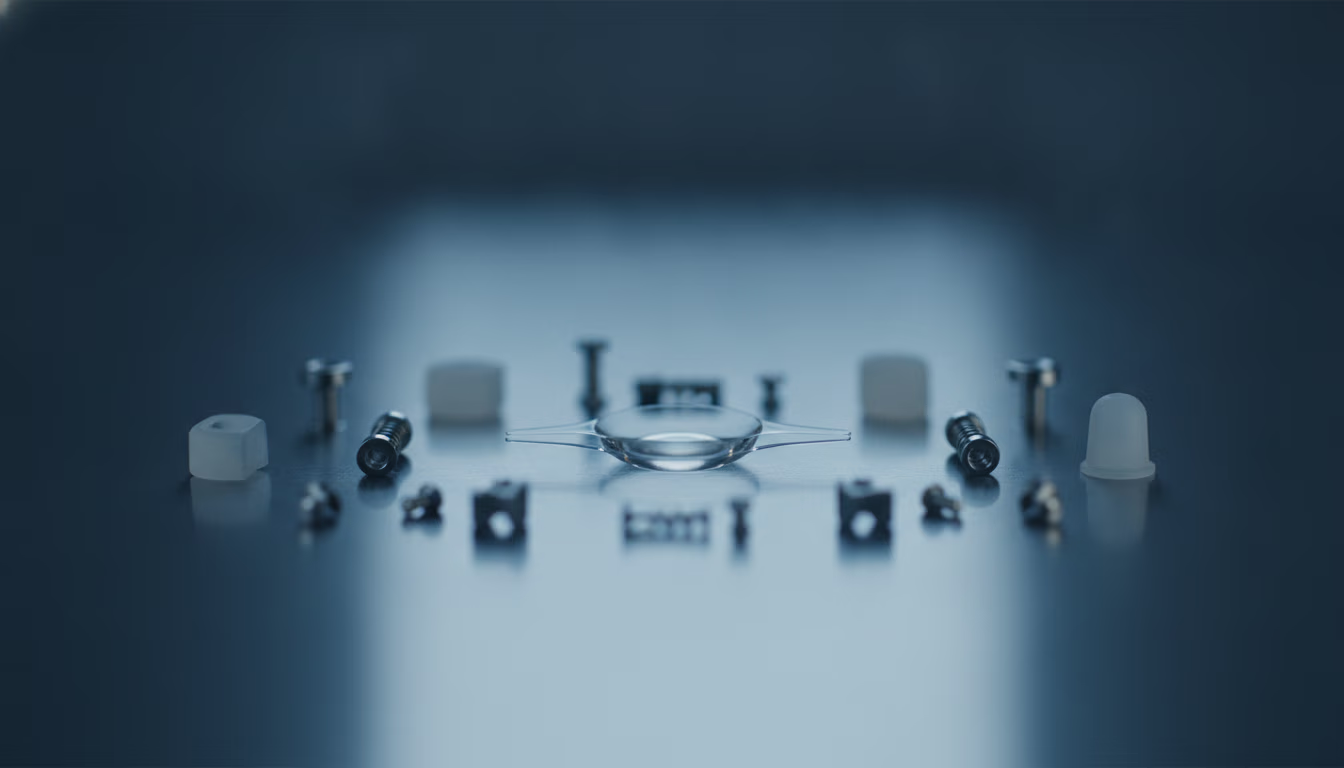
PEEK, prized for implants, surgical instruments and dental devices precisely because of its mechanical strength, chemical resistance and biocompatibility, is chemically inert by design — the same property that makes it safe in the body makes it resistant to wetting by coatings, adhesives or cells. Intraocular lenses (IOLs) need improved hydrophilicity to integrate with ocular tissue after implantation, plus depyrogenation, because pyrogens trigger fever and immune responses if they reach the eye during surgery. Catheters need friction-reducing, biocompatible coatings that stay adhered under insertion and removal stress, and they need to be microbiologically clean before they're ever sterilized and packaged.
None of these are single-issue problems. A catheter coating that's mechanically well-bonded but leaves microbial contamination behind doesn't ship. An IOL that's biocompatible but too tacky to handle without particulate contamination doesn't pass inspection. A PEEK implant surface that's clean but chemically unreactive won't hold the coating a surgeon is relying on. Surface prep for medical devices has to clear all of these bars in the same process step, not trade one for another.
Where vacuum plasma treatment fits
Plasma treatment does both jobs in a single dry step. Oxygen or argon plasma removes organic contaminants and measurably reduces endotoxin (pyrogen) load on the surface, while the same exposure grafts polar functional groups — hydroxyl, carboxyl, amine — onto an otherwise inert surface like PEEK, giving it the chemical reactivity to bond coatings, adhesives or cells that it doesn't have untreated. Physically, the plasma also etches the surface at a microscopic level, increasing roughness and giving a coating or adhesive more area to mechanically key into, on top of the chemical activation.
For catheters specifically, the mechanism does double duty: the same reactive species that activate the surface for a friction-reducing or biocompatible coating are also lethal to a broad range of microbial contaminants, so a single plasma cycle can address adhesion and bioburden together. And because medical device manufacturing runs under formal process validation, the fact that plasma parameters — gas composition, pressure, power, exposure time — can be precisely controlled and reproduced batch to batch matters as much as the surface-energy result itself; a process that can't be validated as consistent doesn't survive a design-history-file review, however well it performs in a one-off test.
Where it sits in the process
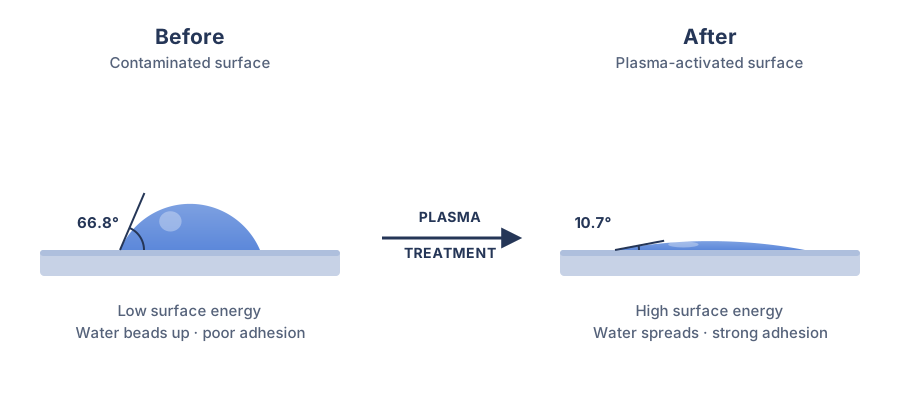
- Implant and instrument surface prep — activates PEEK and other chemically inert polymers ahead of coating or adhesive bonding, improving both mechanical adhesion and cell attachment for implants and tissue-engineering scaffolds.
- IOL manufacturing — improves hydrophilicity for tissue integration, removes pyrogens ahead of implantation, reduces handling tackiness, and can prepare the surface for bio-molecule immobilization on drug-eluting lenses.
- Catheter processing — activates the surface for friction-reducing, biocompatible coating adhesion while simultaneously reducing microbial contamination ahead of terminal sterilization.
- Adhesive bonding of device assemblies — activates low-surface-energy plastics used in connectors, fittings and multi-part housings so adhesive bonds hold without added mechanical fasteners.
Matching the system to the line
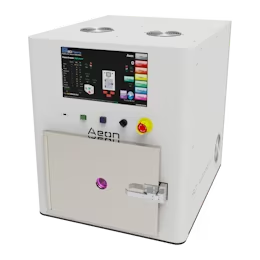
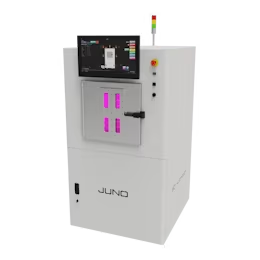
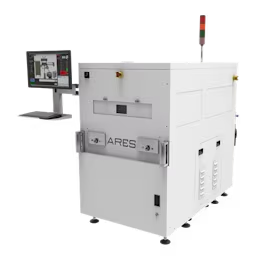
Aeon is a table-top batch system suited to lab-scale qualification and lower-volume device runs, where process development and repeatable small batches matter more than raw throughput. Juno is the batch system for varied device geometries: its reconfigurable shelf layout adapts to almost any part shape, so awkward or mixed components that don't share a common footprint are treated together in one chamber rather than one at a time. Ares is the high-power option for large, flat substrate batches and longer plasma dwell times — sheet stock and film-format polymer materials that need deeper etching, polymer cross-linking or thicker oxide removal than a standard cycle delivers.
Verifying the result
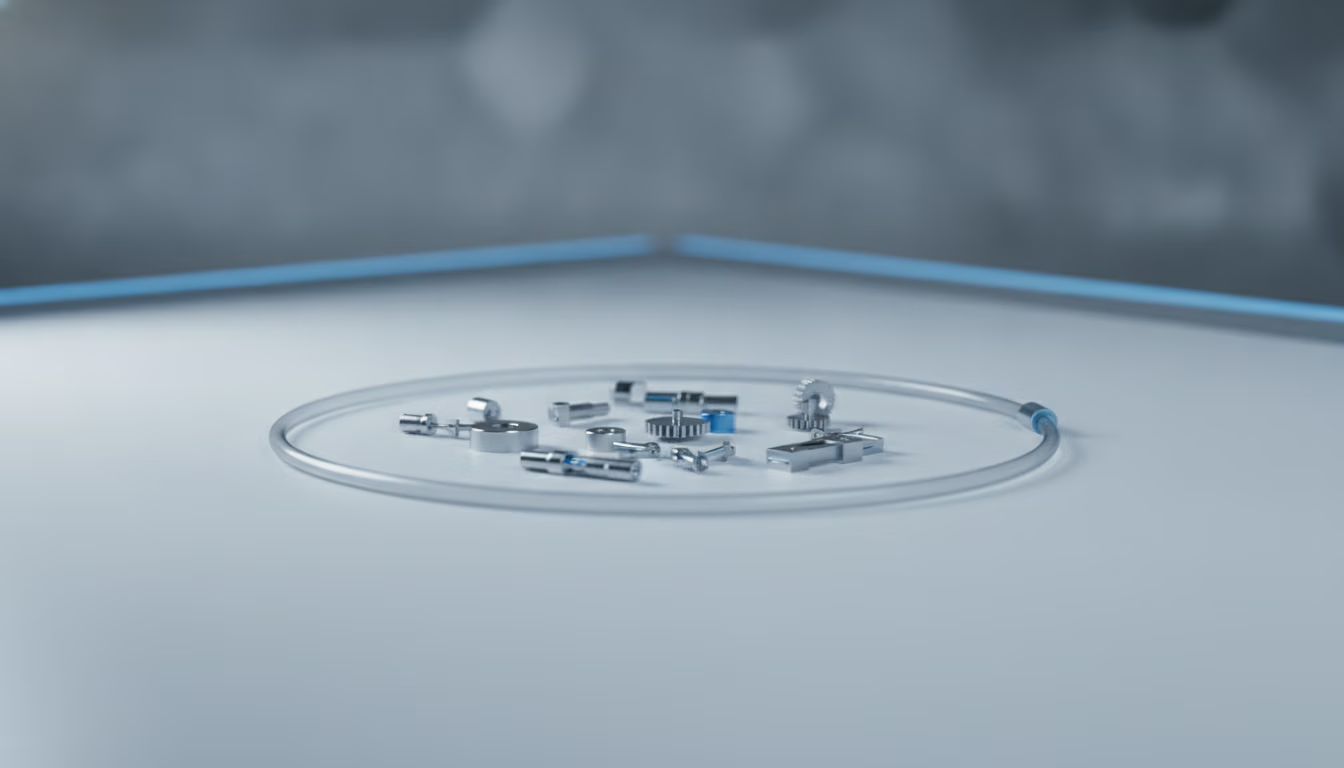
Contact-angle measurement is the fastest wettability check available before a device moves to the next process step, but in a regulated environment it's a screening tool, not the whole verification story. The parameters that produced a passing contact angle — gas composition, power, pressure, exposure time — have to be logged and held constant batch to batch as part of process validation, and the surface result has to be correlated against the tests that actually govern release: coating adhesion (peel or scratch testing), bioburden or endotoxin assay, and biocompatibility panel results where applicable. A plasma step that isn't tied to those downstream results is a step nobody can prove is still working.
Related applications
See it in production
Read the case studyRelated articles

Plasma Treatment of PEEK: Revolutionizing Biomedical Applications
Polyether ether ketone (PEEK) is a high-performance polymer known for its excellent mechanical properties, chemical resistance, and...

Plasma Cleaning for Intraocular Lenses (IOLs): Enhancing Clarity and Biocompatibility
Intraocular lenses (IOLs) are a vital component in cataract surgery, restoring vision to millions of people worldwide.
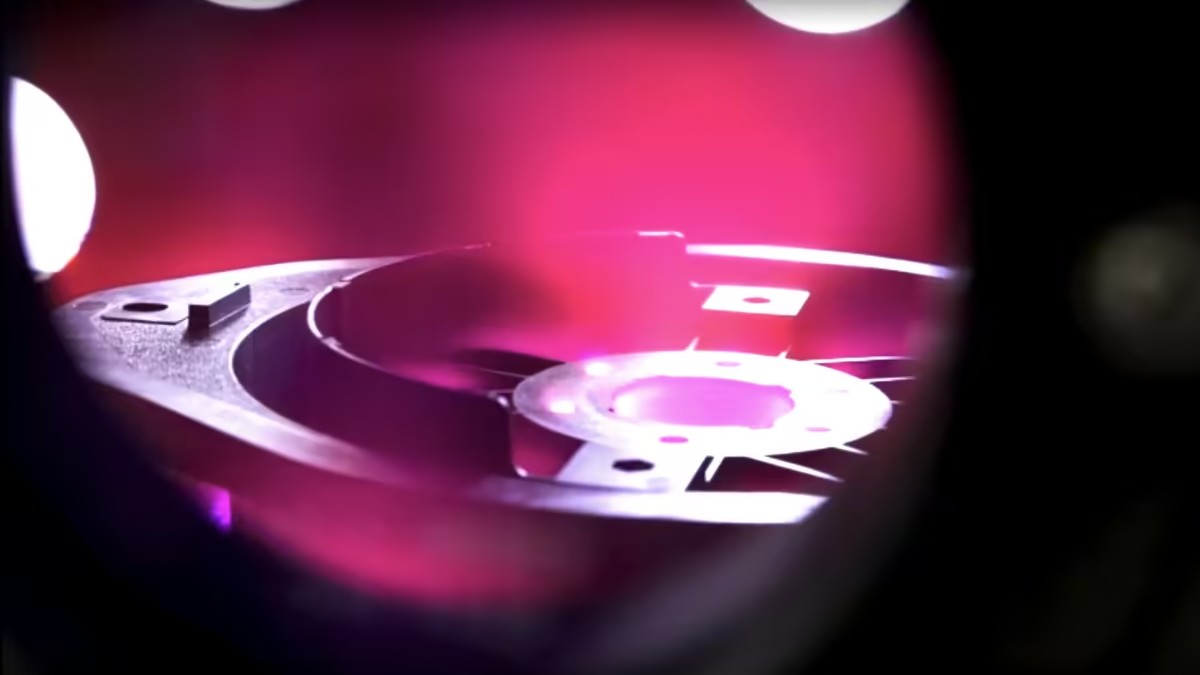
A Look into Plasma Treatment for Superior Plastic Adhesion
Plasma treatment of plastics to improve surface wettability and increase adhesion for printing, painting, and gluing plastic parts.
Frequently asked questions
Why is PEEK hard to bond even though it's an excellent implant material?
The chemical inertness that makes PEEK biocompatible and chemically resistant also makes it naturally low in surface energy — coatings, adhesives and cells all struggle to wet or bond to an untreated PEEK surface.
Does plasma treatment address biocompatibility as well as adhesion?
Yes — the same plasma exposure that grafts polar functional groups onto a surface for chemical bonding also removes organic contaminants and reduces endotoxin (pyrogen) load, addressing bonding and biological safety in the same step.
Can plasma treatment compromise a device's sterility or biocompatibility?
Only if the gas chemistry or parameters are chosen carelessly. Gas selection and functionalization technique are chosen specifically to preserve biocompatibility, and because the process is dry, it avoids introducing the solvent residues a wet-chemical alternative could leave behind.
Is a passing contact-angle reading enough to release a plasma-treated device batch?
No — contact angle is a fast screening check, but process parameters (gas, power, pressure, exposure time) need to be logged and held constant as part of formal process validation, with the surface result correlated against coating adhesion, bioburden/endotoxin and biocompatibility test results.
Which system fits medical device manufacturing — Aeon, Juno or Ares?
Aeon suits lab-scale qualification and lower-volume runs; Juno's reconfigurable shelves take larger, awkwardly shaped or mixed components in one batch; Ares suits large, flat substrate batches needing deeper etching or longer plasma dwell times.